
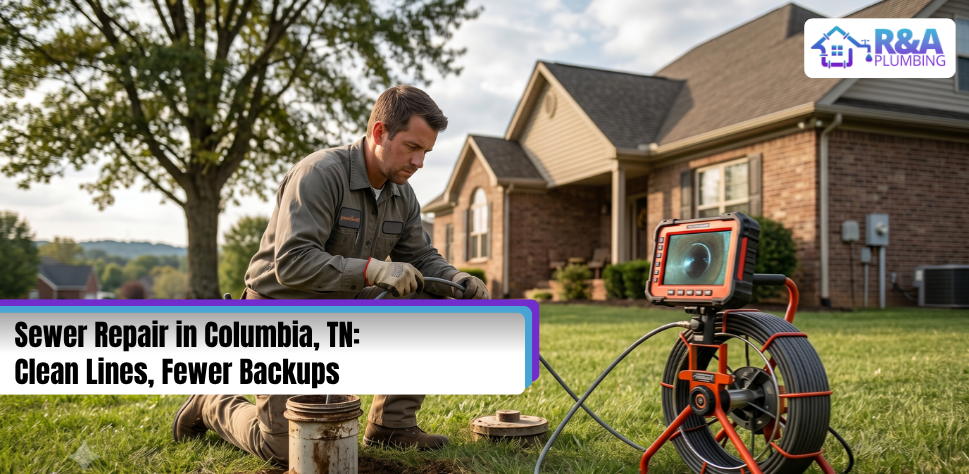
Sewer repair is professional work that fixes a damaged, clogged, leaking, or broken sewer line. A plumber may start with sewer line cleaning or sewer camera inspection, then recommend spot repair, pipe lining, excavation, or full sewer line replacement based on what the camera shows. If several drains are backing up, toilets are gurgling, or sewage is coming through a floor drain, schedule sewer line repair near me as soon as possible. The sooner the problem is found, the easier it usually is to limit cleanup and cost.
You flush the toilet, and the bathtub drain starts bubbling. Then the laundry room smells like sewer gas. A few minutes later, dirty water creeps up from a lower-level shower drain. That is not a normal clog. That is a warning sign that your main sewer line may need cleaning, camera inspection, sewer repair, or full sewer line replacement.
For homeowners in Mt. Pleasant, Franklin, Columbia, Spring Hill, Thompson’s Station, and Brentwood, sewer line problems can feel confusing because the symptoms often look like simple drain issues at first. One slow sink may not be urgent. Multiple drains backing up at once is different.
This 2026 guide explains how to tell the difference between a clog, a damaged pipe, root intrusion, a collapsed line, and a sewer line that needs replacement. You will also learn what a licensed plumber checks first, what service may cost, and when to schedule help before the problem reaches your floors.
Safety Notice: Working on main sewer systems should only be performed by a licensed professional. Improper repairs can result in sewage contamination, unsafe drainage, code problems, or voided homeowner’s insurance. If sewage is backing up inside your home, stop using water fixtures, keep children and pets away from the area, and call a licensed sewer line plumber.
What Sewer Line Problems Are and Why They Happen
Your main sewer line is the large pipe that carries wastewater from your toilets, tubs, sinks, showers, washer, and dishwasher away from your home. When that line is clear and properly sloped, you never think about it. When it clogs or breaks, the whole house can feel like it is working against you.
Sewer line problems usually fall into four categories.
Blockages
A blockage is anything that stops wastewater from moving. Common causes include grease, wipes, paper buildup, feminine hygiene products, toys, soap sludge, and heavy debris. Even products labeled “flushable” can catch inside older sewer lines.
Tree Root Intrusion
Tree roots look for water and nutrients. If your sewer pipe has a crack, loose joint, or small opening, roots can grow inside the line and trap waste. This is common around older homes with clay, cast iron, or aging drain pipe.
Pipe Damage
A damaged sewer pipe may be cracked, separated, sagging, corroded, or collapsed. A pipe belly is a low spot in the line where water and waste sit instead of draining. That low area can collect debris and cause repeated backups.
Poor Access or Missing Cleanouts
A sewer cleanout is an access point that lets a plumber clear or camera inspect the line. Homes without a usable cleanout often take longer to service because the plumber has fewer safe entry points.
The EPA explains that sanitary sewer overflows can back up into homes, cause property damage, and threaten public health.
Plumber’s Advice: If one drain is slow, you may have a local clog. If several fixtures act up together, think main sewer line first.
Warning Signs You Should Never Ignore
Sewer line problems do not always announce themselves with a dramatic backup. Many start small. The trick is knowing which signs point to a deeper sewer and drain cleaning issue.
- Multiple drains are slow at the same time: One slow bathroom sink may be hair or soap scum. Slow tubs, toilets, and sinks together usually point to the main line.
- Toilets gurgle after using other fixtures: Gurgling means air is trapped in the drain system. That can happen when wastewater is struggling to move.
- Water backs up in the tub or shower: Lower drains often show sewer issues first because wastewater follows the path of least resistance.
- Sewage smell near drains or outside: Sewer odor can mean a dry trap, vent issue, broken line, or backup forming in the pipe.
- Wet or sunken spots in the yard: A leaking sewer line can saturate soil above the pipe, especially after heavy use.
- Recurring clogs after drain cleaning: If the same line clogs again and again, the issue may be roots, a belly, or pipe damage.
- Extra green grass over the sewer path: A leaking sewer pipe may feed one strip of lawn more than the rest.
Warning: Do not keep flushing toilets or running water if sewage is coming up through a drain. That adds more wastewater to a line that is already failing.
A sewer camera inspection is the cleanest way to confirm what is happening inside the pipe. Guessing can lead to the wrong repair.
What Happens If You Delay Sewer Repair
Waiting on sewer repair can turn a manageable plumbing call into a cleanup job. Sewer water is not the same as clean water from a supply pipe. It can carry bacteria, viruses, parasites, and other contaminants that do not belong inside your home.
The EPA notes that raw sewage from sanitary sewer overflows can carry bacteria, viruses, protozoa, intestinal worms, and molds or fungi.
Delaying service can create several problems:
- Bigger backups: A partial blockage can become a full stoppage, especially after laundry, showers, or guests.
- Floor and drywall damage: Wastewater can damage flooring, baseboards, cabinets, and wall materials.
- Mold risk: Damp materials can support mold if cleanup and drying are delayed.
- Pipe collapse: Roots and cracks can grow worse until cleaning alone no longer works.
- Higher repair cost: A $350 camera inspection and cleaning today can prevent a much larger excavation or restoration bill later.
- Insurance complications: Ignored maintenance may be treated differently from sudden accidental damage.
Homeowners often hope sewer line cleaning near them will solve everything. Sometimes it does. But if the line is broken, offset, or bellied, cleaning only buys time.
If sewage is already backing up, there is no need to wait. R & A Plumbing provides sewer line services across Mt. Pleasant, Franklin, Columbia, Spring Hill, Thompson’s Station, and Brentwood. Call (931) 982-9775 for a clear diagnosis and upfront estimate before work begins.
DIY vs. Hiring a Licensed Plumber for Sewer Line Work
There are a few things you can do safely when a sewer line acts up. There are also jobs that belong to a licensed plumber every time. Sewer work sits on the serious side of plumbing because it involves wastewater, excavation, code compliance, and sometimes city connection points.
What You Can Handle
You can take these steps before the plumber arrives:
- Stop using water fixtures: Do not run sinks, tubs, toilets, dishwashers, or washing machines.
- Keep people away from sewage: Block off affected rooms and keep pets out.
- Check for a cleanout: Look for a capped pipe outside, in the basement, crawl space, or utility area.
- Take photos: Document visible backup or damage for your records.
- Use a plunger only on a single fixture clog: Stop if the issue affects multiple drains.
When You Must Call a Pro
Call a licensed plumber for main sewer line backups, sewage exposure, sewer camera inspection, root removal, sewer line repair & replacement, excavation, cleanout installation, and any work tied to a municipal sewer connection.
Tennessee licenses and regulates limited licensed plumbers through the Tennessee Board for Licensing Contractors, and homeowners can verify licenses through the state’s public license search.
Do Not Do This: Do not rent a large sewer machine unless you are trained to use it. Sewer cables can injure hands, damage fixtures, or get stuck in broken pipe.
DIY may feel cheaper at first. But when a main sewer line is involved, the wrong tool can turn a clog into a broken pipe.
How Professional Sewer Line Service Works Step by Step
A good sewer line plumber does not start by guessing. The right process protects your home, finds the cause, and helps you avoid paying for the wrong fix.
- Confirm the symptoms, 5 to 10 minutes: The plumber asks which fixtures are backing up, when it started, and whether this has happened before.
- Locate the cleanout, 5 to 20 minutes: A cleanout gives safe access to the sewer line for cleaning and inspection.
- Stabilize the backup, 15 to 60 minutes: If needed, the plumber clears enough blockage to relieve pressure and stop active backup.
- Run a sewer camera inspection, 30 to 90 minutes: A waterproof camera travels through the pipe so the plumber can see roots, cracks, bellies, offsets, grease, or collapse.
- Mark problem areas, 15 to 30 minutes: If repair is needed, locating equipment helps mark depth and location in the yard.
- Explain options, 10 to 30 minutes: You should hear whether cleaning, spot repair, trenchless repair, or replacement makes the most sense.
- Complete approved work, several hours to several days: Cleaning may happen the same day. Sewer line replacement Columbia or Mt. Pleasant projects may take longer.
- Test drainage, 15 to 45 minutes: The plumber runs fixtures and confirms the line flows properly.
- Review warranty and prevention, 10 minutes: You should know what was done and what to watch for next.
Common equipment includes sewer cameras, cable machines, hydro jetting equipment, pipe locators, root cutting heads, and excavation tools. Some repairs may use PVC pipe, SDR sewer pipe, couplings, cleanout fittings, or trenchless lining materials.
Pro Tip: Always ask to see camera footage or still images before approving major sewer repair. A reputable plumber should be able to show why the repair is needed.
Sewer Repair Cost Guide for Franklin, Columbia, and Mt. Pleasant in 2026
Sewer repair pricing depends on the depth, length, location, pipe material, equipment needed, and whether the work is cleaning, inspection, repair, or full replacement. These ranges are planning numbers, not a final quote.
National 2026 cost guides report that sewer line replacement varies widely based on damage, depth, access, and location.
What should be included in a legitimate estimate?
- Labor and materials
- Camera inspection findings
- Repair method and scope
- Excavation or trenchless details
- Cleanup expectations
- Permit or inspection items when needed
- Warranty terms
- License and insurance information
Red flags include vague pricing, no written scope, no license number, no camera proof, and pressure to replace the whole line without showing the problem.
For sewer line replacement cost Franklin TN, the safest next step is an in-home assessment. A shallow front-yard repair may be straightforward. A deep line under a driveway or sidewalk can cost much more.
How to Choose the Right Sewer Line Plumber in Middle Tennessee
The right sewer line contractor should be more than available. They should be licensed, insured, properly equipped, and willing to explain what they find in plain language.
Use this checklist before you hire:
- Verify the license: Use the Tennessee Department of Commerce and Insurance public search tool.
- Ask about insurance and bonding: Sewer excavation can affect lawns, sidewalks, driveways, and utilities.
- Request camera evidence: Do not approve major sewer line repair without visual proof when inspection is possible.
- Ask about repair options: Cleaning, spot repair, pipe lining, and replacement are different solutions.
- Look for local sewer experience: Older homes in Columbia, Mt. Pleasant, and Franklin may have different pipe materials than newer homes in Spring Hill.
- Check review quality: Look for reviews that mention communication, cleanup, pricing, and follow-through.
- Ask about warranties: A sewer line repair should come with clear warranty terms.
Trust signals matter here. BBB accreditation, PHCC membership, manufacturer training, and Angi or HomeAdvisor verification can help, but they do not replace a license, insurance, and real sewer equipment.
R & A Plumbing is based in Mt. Pleasant and serves Middle Tennessee homeowners with drain cleaning, sewer services, emergency plumbing, water heater work, and related plumbing repairs. The company’s public messaging emphasizes education, upfront pricing, reliability, affordability, and warranty-backed workmanship.
Plumber’s Advice: Choose a sewer line plumber who can explain what is wrong without rushing you. If the camera shows roots, cracks, or collapse, the recommendation should make sense when you see it.
Seasonal Sewer Line Maintenance for Middle Tennessee Homes
Middle Tennessee weather can expose sewer line problems fast. Spring rain adds groundwater pressure around buried pipes. Tree roots become more active. Summer guests and laundry loads put more flow through older lines. Winter cold can also stress exterior plumbing and cleanout caps.
A good maintenance plan is simple.
Annual Sewer Line Checklist
- Watch lower drains first: Basement, first-floor, and lower bathroom drains often show sewer issues early.
- Avoid flushing wipes: Even “flushable” wipes can collect in older sewer lines.
- Keep grease out of drains: Grease cools, hardens, and grabs other debris.
- Schedule camera inspection for recurring backups: Repeated clogs need a real diagnosis.
- Know where your cleanout is: A buried or missing cleanout can slow emergency service.
- Check trees near the sewer path: Roots are a major concern near aging pipe.
- Service drains before peak hosting seasons: Spring, summer, and holidays often increase plumbing use.
Preventive sewer and drain cleaning costs less than emergency cleanup in most cases. It also gives you time to compare repair options before sewage enters your home.
The EPA’s WaterSense program says the average family can waste 180 gallons per week, or 9,400 gallons annually, from household leaks. While that statistic focuses on water leaks, the lesson applies across plumbing: small hidden problems get expensive when ignored.
Local Sewer Line Factors in Mt. Pleasant, Franklin, Columbia, Spring Hill, and Brentwood
Sewer line problems in Middle Tennessee are shaped by local growth, older housing stock, clay-heavy soils, trees, rainfall, and utility requirements.
Franklin maintains plumbing permit forms and water or sewer availability request resources through city departments, so permit-related sewer work should be handled correctly.
Columbia Power & Water Systems publishes water resources, annual water quality reports, conservation information, water service forms, and backflow prevention guidance.
Spring Hill’s Water Division reports that its plant has a state-certified bacteriological lab and earned a 99 percent approved rating from a March 2025 TDEC sanitary survey.
EPA consumer confidence report guidance was updated in 2026, and community water systems are required to provide annual drinking water quality reports.
Local sewer issues we often see include:
- Older homes in established areas: Cast iron or clay lines may be more vulnerable to cracks and root intrusion.
- Fast-growing neighborhoods: New additions, remodels, and heavier fixture use can expose undersized or poorly sloped lines.
- Tree-lined properties: Roots can enter weak joints and turn a minor restriction into a recurring backup.
- Rainy seasons: Saturated soil can make weak sewer lines show symptoms sooner.
- Driveway and sidewalk crossings: Sewer line replacement Brentwood or Franklin projects may cost more when hard surfaces are involved.
Whether you need sewer line repair Columbia, sewer line replacement Mt. Pleasant, sewer line cleaning Spring Hill, or sewer camera inspection in Franklin, the right answer starts with diagnosis. Cleaning is useful. Replacement is sometimes necessary. Guessing is expensive.
Homeowners Also Ask About Sewer Line Problems
What are the signs of a broken sewer line?
Common signs include repeated backups, sewage smell, gurgling toilets, wet yard spots, sunken soil, and multiple drains clogging at once. A broken sewer line may also cause one strip of grass to grow greener than the rest. The only reliable way to confirm pipe damage is a sewer camera inspection.
Is sewer line cleaning enough to fix the problem?
Sometimes, yes. Sewer line cleaning can remove grease, sludge, paper buildup, and some root blockages. But cleaning does not fix cracked, collapsed, sagging, or separated pipe. If clogs keep coming back, ask for a camera inspection before paying for repeated cleaning.
How do I know if I need sewer line replacement?
You may need sewer line replacement if the pipe is collapsed, badly corroded, heavily root-damaged, improperly sloped, or failing in multiple areas. Replacement may also make sense if repairs would only patch one part of a system that is already near the end of its life.
How long does sewer repair take?
Basic sewer line cleaning may take one to three hours. A camera inspection often takes less than two hours when access is good. Spot repair may take one day. Full sewer line replacement can take several days depending on depth, length, weather, permits, and cleanup.
Can sewer gas smell make you sick?
Sewer gas can be unpleasant and may signal a plumbing problem that needs attention. A dry trap is simple. A broken sewer line, vent issue, or backup is more serious. If odor is strong, recurring, or paired with slow drains, call a licensed plumber for sewer line services.
Frequently Asked Questions
Q: How much does sewer repair cost in Middle Tennessee?
A: Sewer repair can range from a few hundred dollars for cleaning or inspection to several thousand dollars for repair or replacement. The biggest price factors are pipe depth, location, length, damage, access, and whether excavation is needed. For accurate pricing, schedule a sewer camera inspection and written estimate.
Q: Do I need sewer camera inspection before sewer repair?
A: In most cases, yes. A sewer camera inspection shows whether the issue is grease, roots, broken pipe, a belly, or collapse. That helps prevent unnecessary replacement and repeated cleaning. It also gives you proof before approving major sewer line repair & replacement work.
Q: Can R & A Plumbing handle sewer line repair near me?
A: R & A Plumbing serves Mt. Pleasant, Franklin, Columbia, Spring Hill, Thompson’s Station, Brentwood, Maury County, and Williamson County. The team provides sewer and drain cleaning, sewer line services, emergency plumbing, leak repairs, and related residential plumbing work across Middle Tennessee.
Q: Is sewer line replacement covered by warranty?
A: Warranty terms depend on the repair method, materials, and cause of failure. Ask your plumber what parts, labor, and workmanship are covered before work begins. R & A Plumbing’s brand messaging emphasizes warranty-backed work and clear communication, so homeowners know what is included.
Q: What should I do before the sewer plumber arrives?
A: Stop using water, keep people away from sewage, locate the cleanout if you know where it is, and take photos of visible damage. Do not pour chemicals down the drain or keep flushing toilets. Tell the plumber which fixtures backed up first.
Ready to Get Your Sewer Line Fixed the Right Way?
If your drains keep backing up, your toilet is gurgling, or you smell sewer gas in your home, call R & A Plumbing for sewer repair in Middle Tennessee. Our licensed, insured team serves Mt. Pleasant, Franklin, Columbia, Brentwood, Thompson’s Station, Spring Hill, Maury County, and Williamson County.
You will get plain-language answers, upfront pricing, clean workmanship, and repair options that fit the real condition of your sewer line. Call (931) 982-9775 today to schedule sewer camera inspection, sewer line cleaning, sewer repair, or sewer line replacement.
Water damage and sewage backups do not wait. Neither should you.