
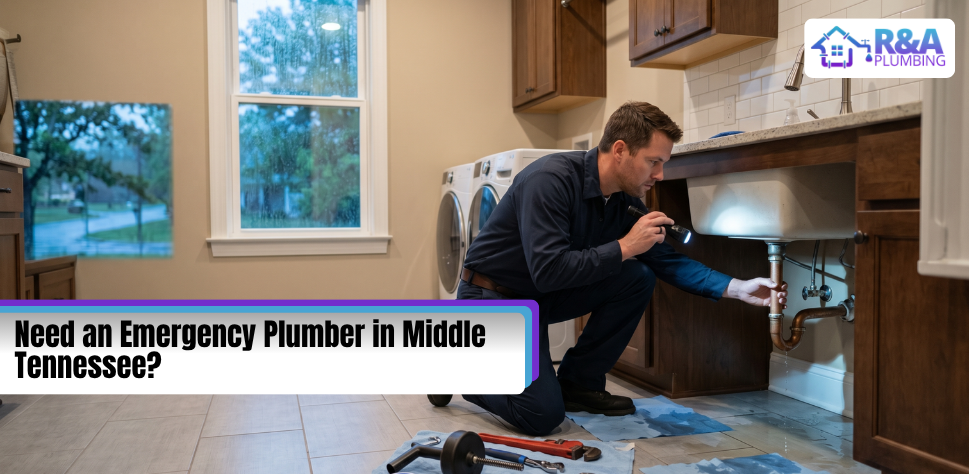
An emergency plumber handles urgent plumbing problems that can damage your home, create health risks, or leave you without safe water or drainage. This includes burst pipes, major leaks, overflowing toilets, sewer backups, water heater leaks, and clogged drains that affect the whole house. If water is moving, sewage is backing up, or you cannot use your plumbing safely, call for emergency plumbing services near me and shut off the water if you can reach the valve safely. Keep reading for the signs, costs, and next steps.
If you walked into the laundry room in May and found water spreading under the washer, or your guest bathroom toilet started overflowing right before the company arrived, you do not have time to scroll through a dozen plumbing websites. You need an emergency plumber who knows what to shut off, what to test, and how to stop the damage before it spreads.
In Franklin, Columbia, Spring Hill, Mt. Pleasant, Brentwood, and Thompson’s Station, May can be rough on plumbing. Heavy spring rain, growing tree roots, busy family schedules, and older water lines can turn small warning signs into urgent leaks, sewer backups, and drain emergencies. Franklin averages about 5.4 inches of precipitation in May, based on NOAA climate normal data, which makes it one of the wettest months for local homes.
For active water problems, start with our emergency plumbing services page, then use this guide to understand what is happening and what to do next.
Safety Notice: Working on gas lines, main sewer systems, or any plumbing connected to electrical components should only be performed by a licensed professional. Improper repairs can result in gas leaks, sewage contamination, electrical hazards, or voided homeowner’s insurance. If you suspect a gas leak, leave the building immediately and call your gas utility’s emergency line.
What Is Emergency Plumbing in May and Why Does It Happen?
Emergency plumbing is any plumbing issue that cannot safely wait for a regular appointment. The key word is safely. A dripping faucet may be annoying. A pipe leaking behind drywall is different. A toilet overflow on the second floor is different. A sewer line backing up into a shower is very different.
In May, our emergency plumbing calls around Middle Tennessee often fall into a few patterns.
Sudden Water Line Leaks
A water line is the pipe that carries clean water into fixtures like sinks, toilets, tubs, washers, and water heaters. Leaks can happen when fittings loosen, older pipe corrodes, or pressure spikes stress weak spots.
Toilet and Fixture Overflows
An overflow happens when water cannot drain fast enough or a fill valve keeps running. Homeowners often blame the toilet, but the real issue may be deeper in the drain line.
Drain and Sewer Backups
A main sewer line carries wastewater away from the home. When it clogs, more than one drain may back up at the same time. Heavy rain and tree root growth can make hidden sewer issues show up fast.
The EPA says the average household’s leaks can waste more than 9,300 gallons of water each year, and 9 percent of homes have leaks wasting 50 gallons or more per day.
Plumber’s Advice: If you hear water running when every fixture is off, treat it like an urgent leak until proven otherwise.
Warning Signs You Should Never Ignore
Some plumbing problems give you a little warning before they turn into a middle of the night call. Others show up all at once. Either way, these signs deserve fast attention from 24 hour plumbers near me.
- Water stains on ceilings or walls: A brown spot or bubbling paint usually means water is already inside the building material.
- Multiple slow drains at once: One slow sink may be a local clog. Several slow drains often point to a sewer or main drain issue.
- Gurgling toilets or tubs: Gurgling means air is trapped in the drain system. That can happen when wastewater is struggling to move.
- A toilet that keeps overflowing: A plunger may help once. Repeated overflows mean the cause has not been fixed.
- Hot water tank moisture: Rusty water, pooling near the base, or a popping sound may signal a failing water heater.
- Low water pressure across the home: A sudden drop can mean a hidden leak, pressure regulator issue, or water service problem.
- Sewage smell near drains: Sewer gas odor can point to a dry trap, broken vent, or backed-up sewer line.
Warning: Do not keep flushing an overflowing toilet. Shut off the small valve behind the toilet, then call an emergency drain service if the water is still rising or other drains are backing up.
The next question is simple: what happens if you wait?
What Happens If You Delay a Plumbing Emergency?
A plumbing emergency rarely gets cheaper with time. Water keeps moving until someone stops it. Sewage contamination spreads. Moisture gets under flooring, into cabinets, and behind baseboards.
Small leaks are especially sneaky. A supply line drip under a vanity can soak the cabinet floor for days before you see it. A pinhole leak behind drywall can raise humidity, feed mold, and damage insulation. A $150 to $350 repair can become a flooring, drywall, or cabinet replacement project when it sits too long.
Sewer backups carry a different risk. The EPA notes that sanitary sewer overflows can contain bacteria, viruses, protozoa, intestinal worms, and molds or fungi. That is why we treat sewage as a health and sanitation issue, not just a plumbing inconvenience.
Here are the most common cost escalators:
- Flooring damage: Laminate, hardwood, and subfloor materials can swell quickly.
- Mold risk: Damp building materials need fast drying and cleanup.
- Insurance trouble: Many policies treat sudden damage differently from ignored maintenance.
- Fixture failure: A stressed water heater, toilet, or shutoff valve can fail completely.
- Code issues: Unpermitted repairs can create problems during resale or renovation.
If you already have active leaking, overflowing, or wastewater coming up through a drain, there is no reason to wait. R & A Plumbing provides emergency plumbing services in Middle Tennessee, with 24/7 service promoted on its official site. Call R & A Plumbing at (931) 982-9775 for upfront pricing and help from a licensed local team.
DIY vs. Hiring a Licensed Plumber, Honest Breakdown
We are not against homeowners doing simple, safe plumbing tasks. A little knowledge can prevent damage while you wait for help. The line is safety, licensing, and whether the repair can create bigger damage if it goes wrong.
What You Can Handle
You can usually do these steps safely:
- Turn off the water: Use the fixture shutoff valve or main water shutoff if water is actively leaking.
- Stop using affected fixtures: Do not run sinks, tubs, toilets, washers, or dishwashers if drains are backing up.
- Clear minor surface clogs: Remove hair from a tub strainer or clean a sink stopper if the clog is visible.
- Move belongings: Get boxes, rugs, and furniture away from wet areas.
- Take photos: Document damage before cleanup for your records.
When You Must Call a Pro
Call a licensed plumber for main sewer lines, water heater leaks, water line repairs, slab leaks, gas-adjacent work, major fixture overflows, and anything that may require a permit.
In Tennessee, homeowners can verify professional licenses through the Tennessee Department of Commerce and Insurance public search tool. In Franklin, plumbing permit forms are listed through the city’s Building and Neighborhood Services resources, which is another reason permit-required work should be handled properly.
Do Not Do This: Do not pour repeated chemical drain cleaners into a backed-up drain. They can damage pipes, splash back during service, and make the job more dangerous.
Now let’s walk through what happens when the plumber arrives.
How Emergency Plumbing Repair Works Step by Step
A good emergency plumber does not guess. The job starts with controlling the problem, then tracing the cause.
- Stabilize the home, 5 to 15 minutes: The plumber confirms the water is off, checks active leaks, and protects the work area.
- Inspect the affected system, 15 to 30 minutes: This may include fixture testing, pressure checks, moisture checks, or drain line evaluation.
- Find the source, 20 to 60 minutes: For drain emergencies, this may involve a sewer camera inspection. For leaks, it may involve opening an access point.
- Explain options and pricing, 10 to 20 minutes: A trustworthy plumber gives you repair choices before work begins.
- Complete the repair, 30 minutes to several hours: Simple valve or supply line repairs may be quick. Sewer and water heater issues take longer.
- Test the system, 10 to 30 minutes: The plumber runs fixtures, checks pressure, confirms drainage, and watches for leaks.
- Clean up and review warranty, 10 minutes: You should know what was repaired, what to watch, and what is covered.
For emergency drain service, common tools include closet augers, drain machines, hydro jetting equipment, and camera inspection systems. For water heater work, many plumbers use well-supported brands such as Rheem, Bradford White, Navien, and similar manufacturer-backed equipment when replacement is needed.
Pro Tip: Ask your plumber to show you the main water shutoff before they leave. That one minute can save you thousands later.
Emergency Plumber Cost Guide for Middle Tennessee in 2026
Emergency plumber pricing depends on the problem, time of day, accessibility, parts, and whether cleanup or permitting is involved. These are planning ranges, not a quote. The best estimate comes from an on-site diagnosis.
A legitimate plumbing estimate should include labor, parts, cleanup expectations, warranty terms, and any permit items. It should also show the company name, license information, and payment terms.
Red flags include vague verbal pricing, unusually low bids, no license number, no written scope, and pressure to replace equipment before testing the problem. R & A Plumbing’s brand materials emphasize upfront pricing, education, and warranty-backed work, which is exactly what homeowners should expect from emergency plumbing services in Franklin and across Middle Tennessee.
Financing or payment flexibility may be available for larger repairs, especially water heater replacement, sewer repairs, or major leak restoration. Ask before work begins.
How to Choose the Right Emergency Plumber in Franklin, Columbia, and Mt. Pleasant
When water is spreading, you may feel rushed. Still, take a few minutes to choose carefully. The right emergency plumber near me should be fast, licensed, insured, and clear.
Use this checklist before hiring:
- Verify the license: Use the Tennessee Department of Commerce and Insurance license search.
- Ask about insurance and bonding: This protects your home if something goes wrong.
- Confirm emergency availability: A true emergency plumbing company should answer after hours.
- Ask for upfront pricing: You should know the cost before repair work starts.
- Look for manufacturer relationships: Certifications or contractor programs from brands like Rheem, Bradford White, Navien, Moen, and American Standard can signal training.
- Check review patterns: Look for real comments about punctuality, communication, cleanup, and follow-through.
- Check trust indicators: BBB accreditation, PHCC involvement, and strong local reputation all help.
Local companies often outperform national chains because they know the streets, neighborhoods, water systems, and permit offices. That matters when your home is in Westhaven, Fieldstone Farms, downtown Columbia, Cherry Grove, Tollgate Village, or near older plumbing in Mt. Pleasant.
May Plumbing Maintenance for Leaks, Drains, and Overflows
May is a smart month to check plumbing because spring rain, yard growth, and heavier home use all collide. Families are washing sports uniforms, hosting guests, watering yards, and using outdoor spigots again.
Here is a simple preventive checklist:
- Test your main shutoff valve: Make sure it turns without forcing it.
- Look under sinks: Check for swollen cabinet bottoms, stains, or damp valves.
- Flush water heater area visually: Look for rust, puddles, or moisture near the pan.
- Run basement or lower-level drains: Slow drains can warn you before a backup.
- Check outdoor hose bibbs: Winter stress may show up as leaks when you turn them on.
- Listen for running toilets: A bad flapper can waste water quietly.
- Schedule drain service early: If drains are slow now, do not wait for a holiday weekend overflow.
The EPA says the average family can waste about 180 gallons per week, or 9,400 gallons per year, from household leaks. Preventive maintenance is usually cheaper than an emergency call, and it gives you time to plan instead of react.
Plumber’s Advice: Put a water alarm near your water heater, washer, and any basement drain. It is one of the cheapest early warning tools you can buy.
Local Plumbing Factors in Mt. Pleasant, Franklin, Columbia, Spring Hill, and Brentwood
Middle Tennessee plumbing has its own patterns. Local soil, rain, water quality, older neighborhoods, and rapid growth all affect plumbing systems.
Columbia Power & Water Systems publishes annual water quality reports for local customers, and those reports are the right place to verify treatment data and water quality details. Spring Hill’s Water Division reports that its treatment plant is designed to produce 4 million gallons per day and operates 24 hours a day, every day of the year. It also notes a 99 percent approved rating from a March 2025 TDEC sanitary survey.
Mt. Pleasant also publishes water quality reports through local public works resources, which homeowners can use to review source water and testing information. Brentwood Water Corporation makes its Consumer Confidence Report available online and noted a Stage 2 water conservation status in May 2026, which is a timely reminder that leaks matter even when your plumbing seems minor.
Local issues we watch for include:
- Mineral buildup: Scale can affect faucets, water heaters, and valves.
- Tree root intrusion: Roots seek moisture and can enter older sewer lines.
- Heavy rain load: Saturated ground can expose weak sewer or drainage systems.
- Older pipe materials: Some homes in established neighborhoods have aging supply or drain lines.
- Growth and remodels: New fixtures added to old plumbing can reveal pressure or drain limits.
For homes in Franklin, Columbia, Spring Hill, Thompson’s Station, Brentwood, and Mt. Pleasant, emergency plumbing is not just about speed. It is about local experience.
Homeowners Also Ask About Emergency Plumbing
What counts as a plumbing emergency?
A plumbing emergency is any problem that can cause water damage, sewage exposure, loss of hot water, or unsafe plumbing conditions if it waits. Examples include burst pipes, major leaks, overflowing toilets, sewer backups, leaking water heaters, and whole-home drain stoppages. If you are unsure, shut off the water if safe and call an emergency plumber for guidance.
Should I call 24 hour plumbers near me for a slow drain?
Call right away if more than one drain is slow, you hear gurgling, or wastewater backs up into a tub, shower, or floor drain. A single slow bathroom sink may be minor. Multiple slow drains often mean the main line is restricted, which can become a sewer backup.
Is a leaking water heater an emergency?
Yes, a leaking water heater can be an emergency, especially if water is pooling near electrical components, the tank is rusted, or hot water is spraying. Turn off power or gas only if you know how to do it safely. Then call for emergency water heater repair near me.
What should I do before the plumber arrives?
Turn off the fixture valve or main water valve, stop using drains and toilets if there is a backup, move valuables away from water, and take photos. Do not open walls, use chemical drain cleaners, or keep testing the fixture. Those steps can make damage worse.
Frequently Asked Questions
How much does an emergency plumber cost in Franklin or Columbia?
Most emergency plumbing visits include a diagnostic or service fee, then repair pricing based on the problem. Simple repairs may be a few hundred dollars. Main drain, water heater, or hidden leak repairs can cost more. Ask for written upfront pricing before work begins.
Can R & A Plumbing provide same-day emergency plumbing services?
R & A Plumbing promotes 24/7 emergency plumbing service for Middle Tennessee homeowners, including Mt. Pleasant, Franklin, Columbia, Spring Hill, Brentwood, and Thompson’s Station. For active leaks, overflows, or drain backups, call (931) 982-9775 and describe what is happening.
Do I need a licensed plumber for emergency drain service?
Yes, especially when the issue involves a main sewer line, repeated backups, sewage, or pipe repair. A licensed plumber can diagnose the line, use the right equipment, and identify whether the problem is a clog, root intrusion, broken pipe, or venting issue.
Are emergency plumbing repairs covered by warranty?
Warranty coverage depends on the repair, parts used, and cause of failure. R & A Plumbing’s brand materials reference one year warranties on repairs and labor support for fixtures or appliances purchased through the company. Confirm the warranty terms on your estimate before work begins.
What areas does R & A Plumbing serve?
R & A Plumbing serves Middle Tennessee, with a focus on Mt. Pleasant, Columbia, Spring Hill, Thompson’s Station, Franklin, Brentwood, Maury County, and Williamson County. The company is based in Mt. Pleasant and provides residential and light commercial plumbing services.
Ready to Fix This the Right Way?
Water damage does not wait, and neither should you. If you need an emergency plumber in Franklin, Columbia, Spring Hill, Mt. Pleasant, Brentwood, or Thompson’s Station, call R & A Plumbing at (931) 982-9775 for fast help, upfront pricing, and work backed by local experience.
We are licensed, insured, and focused on clear communication from the first call to final cleanup. Call now to schedule same-day emergency plumbing service in Middle Tennessee.